
Sourdough Starter: Stiff vs. Liquid - Which One Is Right for You?
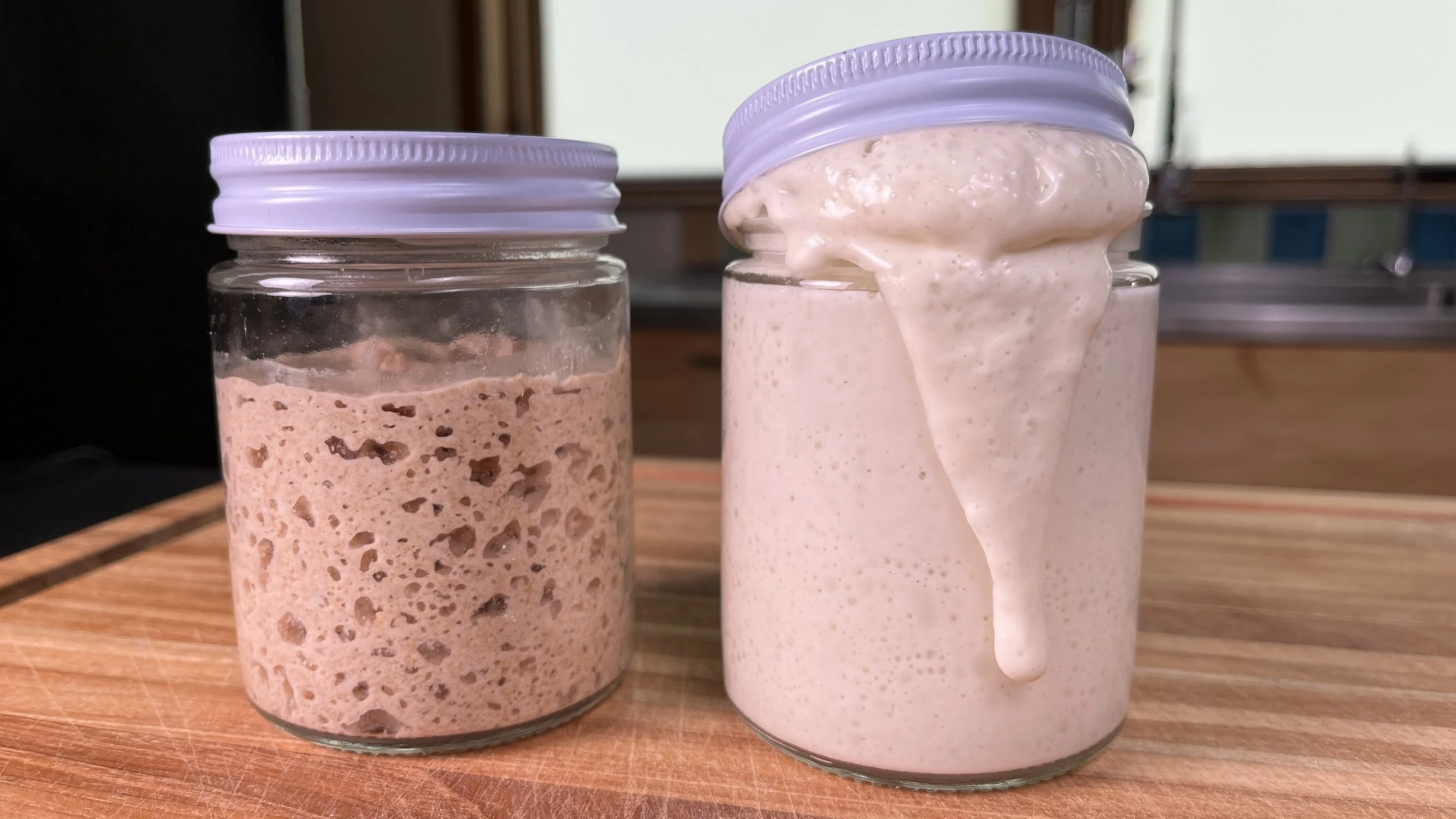
Not all starters are created equal. Beyond the flour you choose or how frequently you feed it, one major variable shapes flavor, texture, and baking performance: hydration. In other words, is your starter stiff or liquid? Both types can produce exceptional bread, but each comes with its own strengths and challenges.
What Is a Stiff Starter?
A stiff starter is typically maintained at 50–60% hydration. That means you’re feeding it half as much water as flour. This creates a stiffer, more dough-like consistency. Because of its lower water content, fermentation happens more slowly and encourages more acetic acid which is associated with vinegary flavors. However, a stiff starter will generally create a milder, even slightly sweeter flavor in bread -- and that’s because the overall amount of acid produced during fermentation is lower, because a stiff starter creates an environment more favorable to yeast than to bacteria.
Pros:
Longer peak window: Stiff starters ferment more gradually, making them more stable. They can hold their peak longer, making them more forgiving to feed.
Great for whole grain doughs where the extra nutrition in the whole grain tends to supercharge fermentation. The dough can easily “run away” from you before adequate strength is built. So a slower fermenting starter can help you wrestle back control.
Cons:
Trickier to mix: If you’re used to stirring a liquid starter, then this is more like kneading. (But on the pro-side, there’s less mess! No sticky, gluey dough to contend with!)
What Is a Liquid Starter?
A liquid starter is maintained at 100% hydration (equal parts flour and water) and has a pourable, batter-like texture. Its higher moisture level encourages quicker fermentation and promotes lactic acid development that’s associated with a yogurt-like tang. If you like tangier bread, then a liquid starter may be right for you, because a more liquid environment favors bacteria over yeast. It’s the bacteria that produce the acids linked to that quintessential sourdough tanginess.
Pros:
Fast and active: Liquid starters digest flour quickly, making them vibrant and ready to use in a shorter timeframe.
Easy to mix: With no kneading required, feedings require a fairly quick stir. (On the con side, the mixture is more gluey, so cleaning spoons, jars and bowls is harder.)
Cons:
Shorter peak window: Liquid starters rise and fall rapidly, so timing becomes more important.
Less structure in dough: Higher acid production will work against you when it comes to building gluten strength. So it’s best to use a liquid starter with strong bread flour where the higher gluten protein will mitigate the impact from the acid.