
pH: WHY (AND HOW) IT MATTERS WHEN MAKING SOURDOUGH
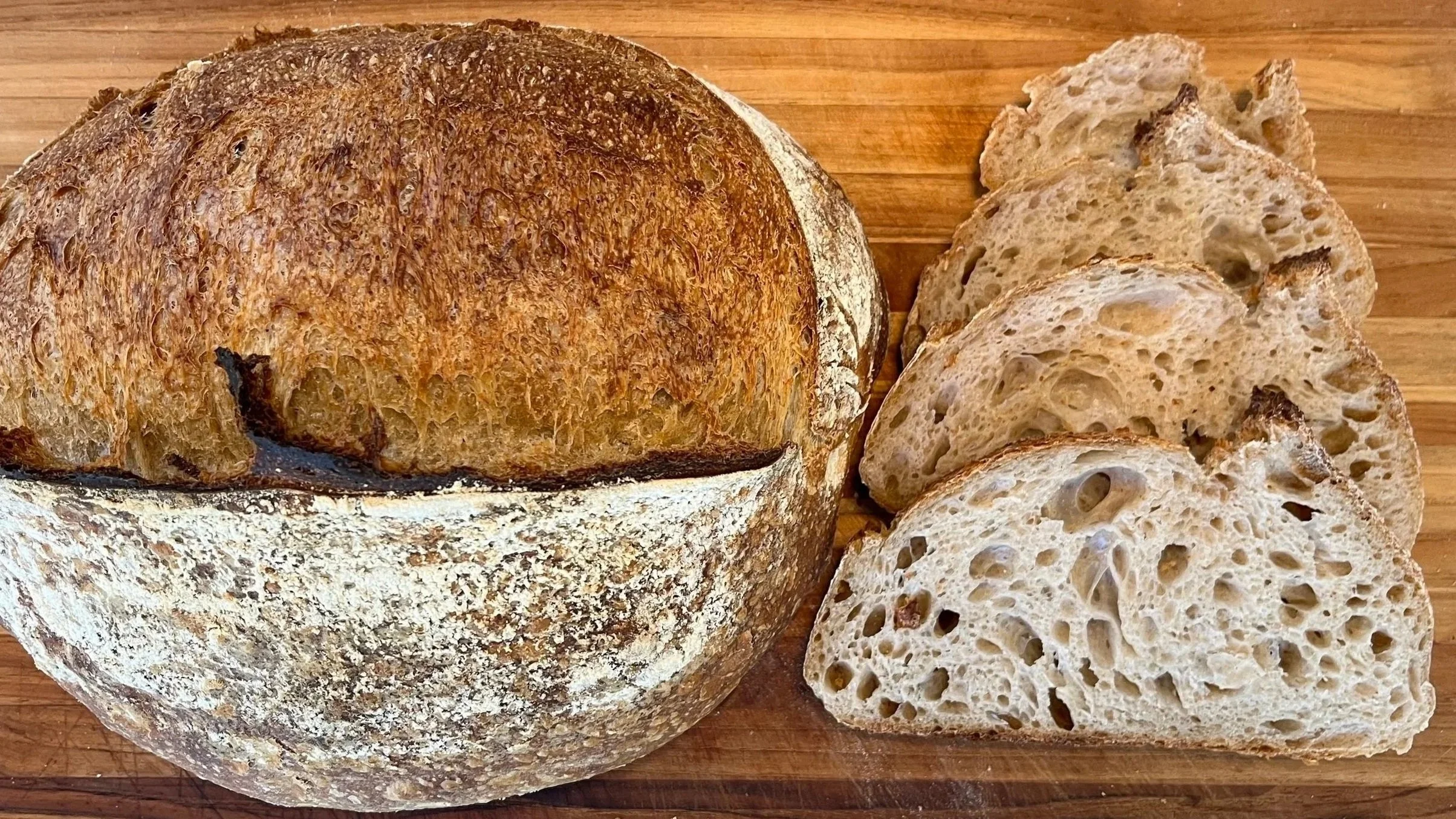
When most people start their sourdough journey, they focus on flour type, hydration, and fermentation time. But there’s another piece of the puzzle that quietly shapes every loaf: pH.
Understanding pH — the measure of acidity — can dramatically improve your bread’s flavor, texture and reliability.
Sourdough fermentation is a living balance between yeasts and lactic acid bacteria. These microbes thrive at different acidity levels, and the pH of your starter and your dough determines which organisms dominate at any given moment. As fermentation progresses, bacteria produce lactic and acetic acids, lowering the pH and creating the tangy flavor that characterizes sourdough.
A healthy, active starter typically settles around a pH of 3.5 – 4.5. At this acidity, lactic acid bacteria are active enough to create flavor and structure, while wild yeasts remain vigorous enough to raise the dough. If the pH drops too low, yeast activity slows, leading to sluggish fermentation. Too much acid breaks down gluten protein, yielding a dense, gummy loaf. The dough may be sticky and hard to work with. The crust may turn out pale or unevenly colored.
If you’ve experienced any of these, it may point to an acidic starter. This is not uncommon — over time, starters can become imbalanced. But don’t worry! It’s easy to fix. Giving your starter a series of high-ratio feedings will cut down on that acid: 1:4:4 or 1:5:5. That means 1 part starter, to five-parts fresh flour and water. Do this every 12 hours for several days, keeping the starter out of the fridge in between, and you’ll quickly rebuild the strength of your starter.
Signs of proper acidity: A starter that rises and falls predictably and has a pleasant tangy aroma (doesn’t smell like paint or acetone). Dough becomes smoother and more extensible as it ferments; it adheres when it’s shaped; and yields an evenly open crumb.
Ultimately, mastering sourdough is about mastering fermentation, and mastering fermentation begins with understanding pH. By learning how acidity shapes microbial activity and dough structure, you gain a powerful tool for consistently baking loaves that are flavorful and beautifully textured.